Showing posts with label Star Trek. Show all posts

Sunday, October 28, 2018

Some of the Genius of "The Planet of the Apes" (1968)


            The Original 1968 “Planet of the Apes” is a science fiction classic.  It is so influential as to seem pedestrian by modern standards, filled with story elements ranging from cliché to thin.  But much like all classics in any genre, the reason it feels predictable or unremarkable is simply because we grew up in a world that it helped create.  The final twist is one of the most iconic moments in movie history, endlessly parodied and creating a demand for clever twists in the genre from there out…. Kind of.

The Plot

            A group of astronauts crash land on a primitive world, after taking a quick assessment of the local humans and concluding they will be running the place in short order, they are then confronted with a brutal reality, a race of ape-men control the planet and use humans as little more than cattle.  The presence of the astronauts, humans who can speak and possessing scientific knowledge beyond what the apes thought humans capable of, throws the social order into a spin.

            Ultimately, it is revealed that the Apes have been covering up the truth, that a once great human civilization ruled earth before destroying itself.  The last astronaut explores the ruins and reveals that the lost civilization was the USA.  The “Alien Planet” was Earth the whole time.  The Astronauts had been in suspended animation and arrived in the far future after a cataclysmic war.


The Twist

By today’s standards the twist is an anti-twist.  Why would an alien planet have humans?  There is a dead giveaway.  BUT, it is important to understand the world this movie was released into.  I kind of give the twist a pass because at the time Science Fiction was still more allegorical to old time adventure and exploration stories about being at sea and finding islands with natives that resembled us but had a differing social order.

For instance, look at "Star Trek" which was still on the air when the movie was released.  Star Trek had so many human populated planets that the whole thing feels cheap in retrospect.  But, it is a consequence of the genre, Star Trek was asked to use props the studio had on hand so as to squeeze all the utility they could out of them.  “We’ve got a Gangster Planet, an Ancient Rome in Modern Times Planet, we have a planet with a Haunted Castle, and another with Greco Ruins!”

The audience for “Planet of the Apes” was primed to say, "Okay, so this is a planet much like ours that fell to apes."  More akin to a cheap out rendition of the Elder Thing/Shoggoth civilization in, "At the Mountains of Madness" by HP Lovecraft.  Altho, the sub textual message of that story WAS SUPER DIFFERENT than the message of “Apes”.  (I should talk about that sometime.)

Having the twist of “Planet of the Apes” be that it was explicitly Earth might have rocked some mental boats because the audience saw Earth in science fiction as being safe from those kinds of story.  Or at least you knew what you were getting into, like “The Last Man on Earth”.  There weren’t any other post-apocalyptic movies from this era that took place on Earth and that was the big reveal, people were just used to certain genre conventions pulling them toward not getting the twist.  Kind of.

The Context

            Let us briefly travel back in time to the era of 60’s science fiction and look at what I would consider the most influential science fiction works of the time and why that presents an important context for “Planet of the Apes”.  At the time there were four shows that have remained in the popular consciousness because of their deep penetration into pop culture.  “Star Trek” and “Doctor Who” which were more oriented toward exploration in the classic adventure story sense, and “The Twilight Zone” and the “Outer Limits” which were both genre-shows known for having twist endings.

            All four of these shows have an element of anthology storytelling to them.  “Twilight Zone” and “Outer Limits” explicitly, but “Doctor Who” and “Star Trek” often felt like standalone storytelling, continuity was not as strong an element as it is these days, the crew of the Enterprise or TaRDiS would show up at a place, be confronted with a science fiction story, and then solve the story and leave, you could watch a serial of “Doctor Who” or an episode of “Star Trek” and see it as a standalone story for the most part.

            Now, “Doctor Who” would travel to possible futures and show the world in various states of decay, or back in time to show the literal caves humans used to live in.  “Star Trek” would travel to human populated worlds and often times had embarrassing presentations of, “THIS COULD BE EARTH!” presentations with “The Omega Glory” one of the most obnoxious episodes of the series.  But neither of these shows was about seeing EARTH after the fall as a gotcha to the audience.

            “Twilight Zone” and “Outer Limits” on the other hand HAD LOTS OF THIS KIND OF THING!  Tho, the “Twilight Zone” takes the cake in this department, I think there were multiple stories of Adam and Eve making the best of things in the post apocalypse of a civilization that preceded ours or being all that was left of our current world.

But, even the “Twilight Zone” twists come in a bunch of different ways, “Third from the Sun” is about people fleeing the planet in an experimental spaceship as a nuclear war is about to break out, turns out the habitable world they are fleeing to… IS EARTH!


Conclusion

            We have this era of science fiction in which Astronauts like the crew of the Enterprise go to planets *like Earth* that have some twist, only looking like Earth to make a point.  We also have “The Twilight Zone” which has twists all about saying, “And it was Earth all along”.  I think the reason “Planet of the Apes” works is that those two micro-genres in Science Fiction, “we are somewhere else” and “it was Earth” really had not mixed as much at the time.

            When the movie starts we think we are watching “Star Trek” by the end we realize we are watching “The Twilight Zone”.  "Planet of the Apes" bridged that gap and changed people's understanding of the genre so that such a twist wouldn't really work these days without some kind of setup that would require a lot more explanation (for instance, “humans have been space faring for so long Earth has been forgotten and the space explorers went there not knowing what it was”).

            Or, you know, maybe I don’t know what I am talking about.  “Planet of the Apes” had a lot going on with animal rights and the idea of a social order that strips the humanity and history from a people to make them into cattle.  Creating a metaphor that some would call “mixed”, but I prefer to look at as complex.  Trying to do too direct a comparison to real life issues always feels cartoonish to me, I prefer to have a blending of issues so that the audience has to do some of the work and can reach their own conclusions about the touched-on topics.

            Or, you know, maybe I don’t know what I am talking about.

"Oh shit.  There goes the planet."
______________________________
            If you like or hate this please take the time to comment, +1, share on Twitter (click that link to follow me), Tumblr, or Facebook, and otherwise distribute my opinion to the world.  I would appreciate it.

Monday, October 2, 2017

Star Trek BS, "The Borg"

            “Rocketboy1313 talks about Star Trek a bit and with no Over Arching Theme”.  Admittedly it is not a great title.  Not a great theme really.  I just had some left over writing from random discussions I have had online and in person about “Star Trek” and decided to throw this out there for consumption.

            Today’s topic is THE BORG.  Kind of.  All of this stuff has official explanations, but I don’t care what those explanations are and have instead written some of my own that I feel make more sense in the context of what I know about the series, and what about this universe that sticks out in my mind.  You can do this too; it is called “Head Canon”.
            Since it is all fictional and doesn’t matter, existing only as an imaginary story to help us ruminate on the world and life to better understand ourselves, the story specifics are meaningless, disregard them at your leisure.
 
Their ships are super rad.
Introduction
            For those who don’t know, the Borg are a race of cyborgs.  They come from a region of the galaxy that they completely dominate.  A vast empire from which these mentally linked shock troops coordinate as a singular intelligence.  They speak as an intimidating chorus of dull voices, they seem their eventual success as such a certainty that they call resistance to it “Futile”.
            The Borg reproduce in two fashions, the first is growing knew biological beings and then attaching cybernetic components as they age, but the other more horrifying method is to inject microscopic robots into the blood of other alien races, bonding with them mentally and making them part of their collective will.  Assimilation of all cultures, scientific knowledge, and striping out all sense of self and personal identity.  They are space-zombies and the single best villains in the franchise.


            They were introduced in “Star Trek the Next Generation” to both the audience and the crew of the Enterprise by the godlike being, Q.  Q’s motives for such an introduction seem to boil down to, “I’m a dick” but regardless of his long-term plans for such actions this episode established that both Q and the Borg had prior interactions with the recurring character of Guinan, a wise bartender character played by Whoopi Goldberg who is centuries old and whose people were destroyed by the Borg… and Really hate Q.
            The Borg became more and more sucky as time went on.  For that matter, so did Q.  Because “Star Trek Voyager” made everything that was big and threatening in “The Next Generation” worse and worse.  Regardless, let me tell you about my fan theory.

My Bullshit
            I actually thought that the Borg might have existed on only 1 planet as a big uni-mind (like "The Matrix") for thousands of years until they encountered some space fairing species.  Their collective intellect is always shown as being vast in knowing things, but rarely good at inventing new things.  I think that the creation of a vast linked intellect led to the society stagnating.
            I think that the species that first met the Borg-Matrix was the El-Aurian, the name of Guinan’s people (Whoopi Goldberg’s people).  Perhaps a scout craft landed far outside their own territory and wanted to learn about the vast and knowledgeable super mind.

This is Guinan on Earth in the late 1800's.
            Maybe Q made the introductions.
            The El-Aurians got assimilated into the mind and that started the Borg on a path of moving from solar system to solar system growing at first in a linear fashion, as they could only breed more of themselves or capture people to add cybernetic attachments, which just seems like a hassle.
            The real start of the Borg’s golden age was the discovery of a new technology, nano-bots which made assimilation of new species so easy that started growing their boarders exponentially.  Finally they decided to go after the El-Aurians’ home world and wipe them out.  The super villain equivalent of self-actualization.  This would explain El-Aurians aversion to both Q and their history with the Borg.

Some More Bullshit
            On “Voyager” the best character was Seven of Nine played by Jeri Ryan, a Borg freed from the uni-mind and returned to a state of being a human (albeit still covered in cybernetic components) who wanted to explore being a human (the race she was before being assimilated) but held onto learned behavior, knowledge, and beliefs from the Borg.  Her knowledge was limited, only a single mind she could hold only a tiny fraction of the Borg’s collective information, but she would often use experiments to further apply her knowledge to help the crew in new ways (she at one point cured death… “Voyager” was often stupid).
            One of Seven’s beliefs was that of Omega.  A theoretical element(?), particle(?), and they went with molecule(?) that would serve as a “perfect” thing.  The Borg see perfection as something that can be attained and Omega as an example of something that is perfect.  But at the same time Seven was always lacking on certain time periods and had holes in her data, so I gelled these concepts together. 
Jeri Ryan gets unfairly maligned, often just labeled as a pretty face, but she is an excellent actress in this series.
When I say she was the best character, SHE WAS THE BEST CHARACTER.
            900 years ago, might have been the Borg’s first experiments with the Omega molecule as a power source which was such a devastating waste of time and resources that the Borg have still not fully recovered and archived all the data from that period. Beyond that they were more insular at the time, seeking that technology rather than expanding, and that explains why they have no strong memories about the prominent empires of the era, like the vast subspace tunnel empire, the Vaadwaur, mentioned in “Dragon’s Teeth”.

            However it is also really possible that with only the minimal amount of data from that specific time, in that specific place, about that specific people would be in the Borg hard drives Seven of Nine has access to on “Voyager”.   This would serve as a good explanation of maybe the Borg not having fractured memories, but just her own data stores being limited (I doubt the entirety of Borg Wikipedia could fit in her cargo bay).

End of my Bullshit
            I have been thinking about “Star Trek” lately because of the new series I have not yet seen.  And probably won’t see for a while because CBS can bite me.
            Hopefully any reading this will find my musings entertaining.  It is just my own head canon.

            (Pardon any grammar issues.  I have a real job now and my time for proof reading has dropped off QUITE A BIT).

______________________________
            If you like or hate this please take the time to comment, +1, share on Twitter (click that link to follow me), Tumblr, or Facebook, and otherwise distribute my opinion to the world.  I would appreciate it.


Monday, April 25, 2016

Whitewashing and "Ghost in the Shell"

This will be a fun topic.

 I am a big fan of the Japanese animated series called “Ghost in the Shell: Stand Alone Complex” a series I have mentioned before in this blog though in a very different context.  The show is set in Japan, decades from now in a dystopian cyber punk future in which people have so augmented themselves with robotic parts and computerized thought processes that the ability to hack into the minds of others and alter their memories and perceptions has caused many to question what it is to be human.  It has a lot of action, with battles between futuristic tanks, cyborgs, and terrorists, but punctuated by deep discussions on what the nature of intelligence, individuality, reality, and the number “0”.  It is one of my favorite shows.
 
The woman with the Purple hair is the source of this blog.
They are making a movie starring Scarlett Johansson, the biggest female action star in film currently as the main character.  And this has caused some controversy because the main character is a Japanese woman, and Scarlett is not.  To be fair, in the context of “Ghost in the Shell” the main character is actually a cyborg, with only her brain as the biological part of her and she could function in the body of a white woman, a black man, or an Asian person of ambiguous gender.  The fluidity of self is a part of the show.

However, there are not a lot of opportunities for Asian actors in Hollywood to star in a big budget science fiction action film, and considering the setting and origin of the story, to have a movie that could be the break out role for a young Japanese actress and cast of Japanese actors to instead go to a star that is already huge seems to be a problem that I can understand and appreciate.

I do find it strange that a movie set in Japan about Japanese characters is being cast with white actors, but I also know that cannot really be avoided.  Max Landis, who at this point seems to be more a person who complains about the movie industry rather than functioning as a writer in that industry spelled out in his vlog how important having a star in this kind of movie is.  And what he is saying makes sense.  It is a self-fulfilling prophecy, you need a star, there are no Asian stars, you don’t use an Asian star in the movie, there continues to be no Asian stars because no one will take a risk on trying to make one.

I would propose a compromise, it would be prudent to do what they did with "Edge of Tomorrow".  Localize the material by changing names and locations.  “Edge of Tomorrow” was originally a Japanese novel called “All you need is Kill” (the stupidest name ever) and they changed the setting from Asia to Europe, the star is now an older white movie star rather than a young Japanese man, and (I say this having read the book) the story is far more coherent and streamlined (though still not perfect by any stretch).  For “Ghost in the Shell” make Tokyo into San Francisco, Kusanagi becomes Kathrine, and Section 9 becomes Section 9 because somethings don't need to be localized.

And if they did localize the property they could also Americanize some of the designs rather than slaving themselves to remaking those found in the original property which often times scream of being overly sleek and stylized.
The story of "What is human in a world of cybernetic augmentation and robotics" is not a new one (I have talked about "Bladerunner" in this blog before, along with "Deus Ex: Human Revolution", and “The Matrix” too for that matter). Saying that the story is somehow inherently Japanese and incapable of being adapted in such a way is meaningless. I've seen all of "GitS: SAC" and the idea of government officials being manipulated by a pharmaceutical company for massive profits at the expense of people's health is a pretty universal story in the US too.

I would go further to point out that Japan has adapted American stories like Spiderman to suit their needs in the past, and we have done the same with Sentai in the form of Power Rangers.  Many anime are based in Europe (or Europe-esc areas) like "Fullmetal Alchemist" and "Attack on Titan" and Japan has cast Japanese actors in their live action adaptations of these movies. This sort of racial compromise is seen as necessary because there are not a lot of white people in Japan for them to make the movie with, just as there are not a lot of Japanese actors in the US to make movies set entirely in Japan.

This actor portrays a guy named Eren Yeager.  Cause I guess he was the most German looking person to show up at casting.
I suppose the industry could compromise and cast "Asian" actors in the various roles, most people in the US wouldn't notice the difference between someone who is Korean or Chinese playing a Japanese person, but those who do would find it offensive I am sure.  This has happened in the past (though I didn’t notice until told) with John Cho, a South Korean actor being cast a Lt. Sulu in the new “Star Trek” reboot, replacing George Takei, a Japanese actor.  But then Takei voiced a Japanese man in “Mulan” a movie that used many different actors of different races to play parts in China.

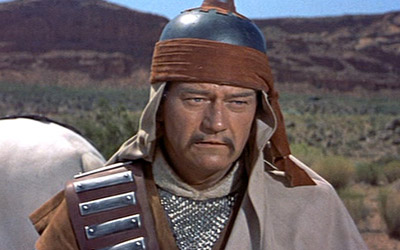
But, maybe they are doing the worst possible compromise, by keeping the setting and the names and just using white actors, which is white washing, even if there is a canonical explanation as to why a Japanese brain could be in a white looking body.  If they use a white actor to play a character that has in all previous instances has been Japanese, this echoes a practice of casting white actors in roles where they portrayed minority characters, though in those past instances it was done without class and is frequently the blemish that keeps movies of the past from holding a place in the modern cultural lexicon, for instance when John Wayne played Genghis Khan. In general studios should avoid such practices when adapting properties by taking care with adaptation and casting decisions.
 
Yeesh!

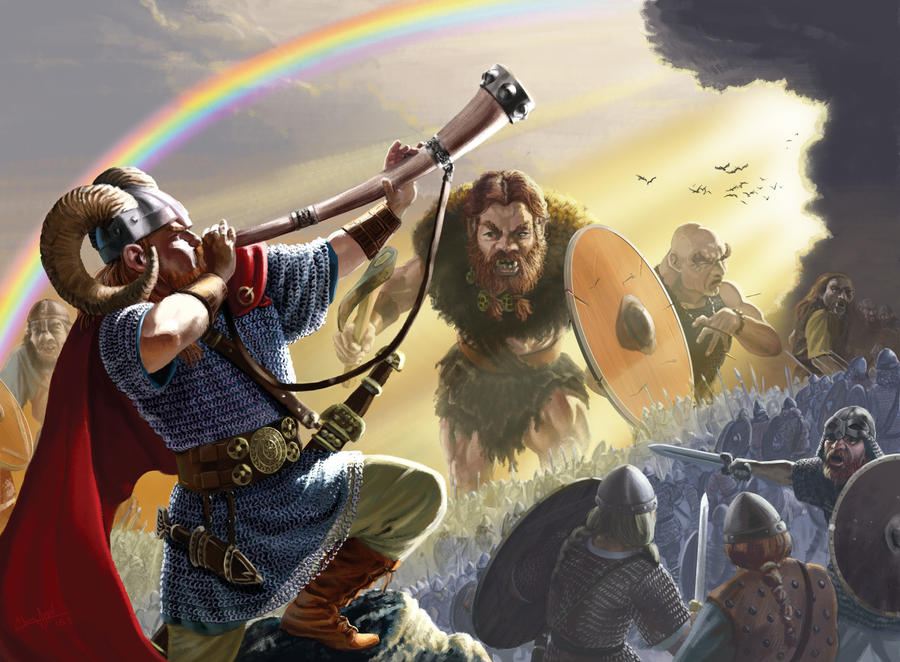
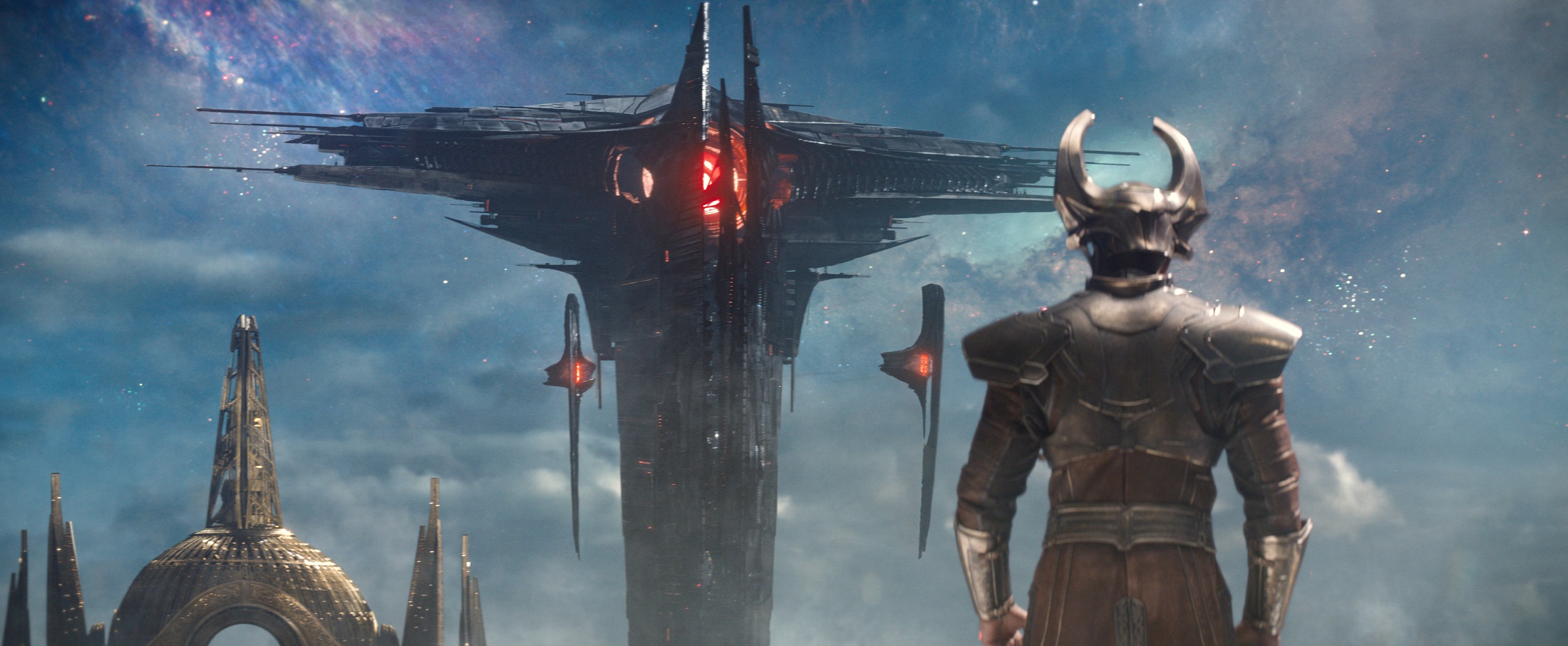
Let’s talk about a movie that has done the opposite of this and cast a black actor in a traditionally white role: Idris Elba played Heimdal in Marvel’s “Thor” Franchise.  Heimdall was described as “the whitest” in Norse mythology, a mythology that is entirely composed of white gods, for a white people.  The stories were adapted by a white artist/author (Jack Kirby) for an overwhelmingly white comic industry to sell to a white audience.  He is played by Idris Elba, who if you are unaware, black guy.  So why am I so okay with this?  A number of reasons.

In the Marvel Universe the Asgardians are aliens that inspired the Norse myths.  In my mind (as in this is my explanation, feel free to ignore it, but I think it works pretty well)… In my mind the Norse people saw the Asgardians, saw them as gods, and as the legends of them passed into myth people started to re-write the legends to better suit how they wanted them to be.  In the Marvel cinematic universe, the Norse people white washed Heimdall to be a white person so that they could feel that they could claim to more closely resemble their gods.

Heimdall as he might have once been imagined.

And let's also be clear, having a cast that looks like the international audience they are trying to attract is helpful to recoup all that money they spent on special effects.
 In the real world, the Norse gods are not real.  They are stories and we as the story tellers are free to picture these fictional people as however we want.  As aliens, as gods, as people who did exist and have since been elevated to godhood in myth (like how Abraham Lincoln hunted vampires).  BUT, “Ghost in the Shell” is not about aliens or gods, it is about Japan.  It is about people who look a certain way and live in a certain place.  If you want to take the thematic trappings of that story and put them in another setting with people who look different in a different place that makes sense.  But to put a white person in a story where she is Japanese is downright silly.

Cyborg or no, watching Scarlett tear her own arms off trying to break into and disable a tank would be a rather interesting thing to see.
______________________________
If you like or hate this please take the time to comment, +1, share on Twitter, Tumblr, or 
Facebook, and otherwise distribute my opinion to the world.  I would appreciate it.

Wednesday, November 4, 2015

CBS Streaming "Star Trek" 2017


This is going to end up like all the rival streaming services on the internet trying to supplant youtube.

Look CBS, we get it.  You want more money.  Who doesn't?

By look at how Yahoo lost $42,000,000 on streaming content, and they are an internet based company that were producing a cult TV show, "Community".  Why are you following their example?

There are already two 500lb gorillas in the cage with you, Hulu and Netflix.  Both have hosted your content in the past, and Netflix is currently streaming all the old "Star Trek" series and several movies.  Why not just partner with one of them?  You don't have to worry about shouldering the production costs yourself, you don't have to worry about producing enough first person content to fill a streaming service.  No additional server hosting and maintenance.


You are not striking out into new territory, you are late to the party, and you are going to spend $2,000,000 a week (that is a conservative estimate) for 3 months and then realize it was all a colossal failure and end up whoring out the streaming rights to Netflix and Hulu anyway to try and recapture the lost production cost.

"Star Trek: The Next Generation" was one of the first shows to cost more than $1,000,000 per episode to produce.
After this catastrophe, some idiot on your corporate board who thought of this stupid plan will blame the "Star Trek" brand name for no longer being a draw.  Ensuring that you will not get to merchandise the license to half of what you could have.  You want to create Lego sets.  You want Kirk and Spock to be in Lego Dimensions, we know you do, because the fans want that.  You want to sell play-doh dispensers shaped like the enterprise.  You want a line of micro-machines.  You want 10,000 t-shirts shipped out daily.

You want money, and this kind of streaming shit is not going to give it to you.

______________________________
If you like or hate this please take the time to comment, +1, share on Twitter or Facebook, and otherwise distribute my opinion to the world.  I would appreciate it.

Friday, February 14, 2014

Movies of 2013, Science Fiction, pt2

Science Fiction
Star Trek Into Darkness, or "Damon Lindelof seriously needs to stop 'contributing' to franchises I like."
Overall: 6/10
Most of the posters suck.  This one is okay.
            I have talked about this movie before.  And have emphasized its studded nature.  The idea that it has a lot of symbols and iconography to give it the semblance of meaning without actually being meaningful.  This is practically the trademark of Damon Lindelof, creator of "Lost", whose one true gift if giving characters distinctive voices, and whose much lesser gift is throwing a lot of shit at the wall to see if it sticks.
            This movie has more twists than pretzel bread, and each makes less sense than the last.  It robs itself of emotional and intellectual resonance by immediately undoing huge plot developments.  Background characters have more visual personality than the main hero, leaving me wanting to hear their story rather than another story about Kirk.  And you know what, I am kind of tired of these characters.  I am a huge fan of all of these actors, but I am tired of these characters because the reboot is doing nothing with them.
            Christopher Nolan took a 70 year old comic book franchise and used it for complex discussions about perseverance, iconography, order and chaos, the nature of fear, and the role of security and privacy.  "Star Trek Into Darkness" rehashes stories and ideas to say nothing.  The idea of WMD's and terrorism were done better in the "Iron Man" franchise.  The idea of a villain who is out to protect his people was done better in the "X-Men" franchise.  "Star Trek" (2009) was given a pass on saying anything because it was a reboot, it showed the new visuals, it showed the new tone, it introduced the characters, this movie does not have that excuse, and by putting in shit like a tribble, and rambling about the Prime Directive makes this movie really stupid regardless of how pretty, exciting, or well acted.  That is not okay.
            Either have it be a fun adventure movie, or have a movie with intrigue and complex discussions, having both is like mixing ice cream and mashed potatoes.  It doesn't work!  At least not on any level that will last or stick with the audience.

Ender's Game, or "Would I like this movie better if I had not read the book?"
Overall: 6/10
Posters are overall better for this movie.  But some of them suck a lot.
            Compliment 1: This is a visual triumph.
            And it is kind of distracting.  When reading the book the video games and simulations are barely described, I personally imagined them as something like 3D "Dig Dug" and "Space Invaders", games that are not about graphical presentation but about teaching the mechanics of the game and developing a skill set related to them (a completely useless skill set for the real world, but a skill set).  I guess the filmmakers had the freedom to make the video games and simulations look however they wanted, but when everything looks so real, it is really hard to believe the twist that they tried to throw at the end.  The idea that Ender would have believed what they said he believed is preposterous when looking at this stuff.  It undercuts the movie's message for the sake of looking much cooler.
            SPOILER (skip to next compliment): There is of course a way they could have done both things, show them playing simple games at first, and then after they reveal what those games were really about flash to the actual battle and show it.  It would have helped to illustrate Ender's revelation at what he had done.
I am having Deja vu again.
Is there only one art department doing spaceship designs now?

            Compliment 2: The story is technically proficient.
            There is a set up and pay off that existed in the novel, the use of human shields later pays off in the use of space ships to protect a particular weapon.  But elements of the story, numerous conversations about the ethics of using Ender like they did, and nearly everything having to do with the tertiary characters is lost, the story is proficient, but bare bones when it comes to introspection and insight.
            Compliment 3: The acting is not nearly as bad as I had been told to expect.
            Butterfield is the bedrock the movie is built on and he is a really good actor, they actually step on his acting at one point by talking over a moment of epiphany, but overall he is really good, and deserves more credit for adding depth to a script that does not have a lot of clever dialogue.  Ben Kingsley commits to his part really well, and shows a level of true professionalism that can be missed when huge talented actors get roles in science-fiction-or-fantasy-coming-of-age stories (which is a genre that is surprisingly robust).  And Harrison Ford, is kind of wasted, growly and pissed are the emotions that come across, but there was a sort of tough love that the role called for that I did not feel come through, he doesn't interact with Ender in way that shows the complexity of that relationship, really he needed a lot more to work with.
            No more compliments.
            That is pretty much the end of the good things I have to say.  This movie is kind of a turkey, especially when compared to the book which is a god damn masterpiece.  It has pacing issues that nearly kill it.  Characters are introduced and dismissed so quickly that they can hardly been said to have existed at all.  And while I can understand that removing the plot about Ender's siblings conquering the world via effective blogging (symbolically mirroring how Ender is coming to terms with his own duality as a killer and compassionate leader, it is a METAPHOR), the fact is, nothing is given time to sink in, nothing is given time to be understood on a level deeper than skin.  Also, the actress that plays Ender's sister, Valentine, has to angrily storm out of a room in one of her two scenes and she looks funny doing it, kind of killed the scene.
            There is also a slapped on environmental message about how the aliens are invading Earth because they need water... Which is stupid horseshit.  Water is an incredibly abundant substance that can be harvested from space (something we see the aliens doing in the movie), there is no reason to talk about scarcity in regards to a civilization that has interstellar travel.  Much like the needless pollution and global warming crap from "Pacific Rim", and the kind of pointless environmental message of Krypton's destruction in "Man of Steel", this is out of place in here.
            There is also a major omission from the book in the number of times Earth was invaded by the Aliens, and why Earth thinks that attacking in an all out scorched world strategy is so necessary to secure the safety of the human species.  In the movie there was one invasion, in the book there had been two.  And while the near annihilation of the Earth in the movie is shown to be a strong motivator for a counter attack, Ender brings up a point that is never properly addressed, "Why have the aliens built up a huge fleet, and not attack Earth again?"  It is explained in the book, not in the movie.  That is a problem with the narrative on a deeper level than it should be because it robs the military of a good bit of justification for what they end up doing.
            Another problem is with the training.  In the book, you understand what is happening, the rules, and why it works the way it does.  You also understand how and why Ender is seen as good and smart because of how he changes the way the game is played through exploiting rules and mechanics.  The movie doesn't explain the game well, so when Ender starts winning it comes off as an attributed ability, rather than a demonstrated ability (which breaks the rule of movie making, "SHOW DON'T TELL").  For a movie that is so visually rich this should not be an issue.
            Also, it is yet another movie that walks up to an important line of violence, and then backpedals.  In the book Ender murders another child that is physically abusing him.  And later on he murders another child.  Ender doesn't intend either murder, he is just fighting hard and without restraint to secure his own safety, this movie has him violently win a fight, but does not have that core idea, it doesn't kill the kids, and those actions foreshadow other events in the narrative that are important.  If you are committed to not showing this sort of violence then you should not make the movie.

            Overall, this should have been a cartoon series, giving it time to do all it needs to do rather than the extremely condensed narrative that it is.

Sunday, February 2, 2014

Movies 2013, Superhero, pt3, Thor

Yesterday I went into the other weird alien in a red cape.  Today I walk about the Space Viking.

Thor the Dark World, or "What if 'Man of Steel' hadn't taken itself so damn seriously."
Overall: 8/10
He's adopted.
            In some ways this was the best movie I saw last year.  It has grand stakes (the fate of the universe), it has numerous environments (alien worlds, cities of the gods), cool costuming, and it is funny.
            Thor as a hero has grown in the movies he has been in, from headstrong naive warrior to a much more deliberate and capable leader.  Stand this in contrast to Tony Stark in "Iron Man 3" which failed to confront his underlying insecurities almost entirely until the last few minutes of the third movie, symbolically removing the broken shards of metal in his heart that were killing him and discarding the thick metal skin that he used to protect himself from the world.  Thor completed that character arc by the end of his first movie, softening and becoming more about self sacrifice rather than personal glory, and by the end of "The Avengers" Thor was on a crusade to bring order to his kingdom.  By the end of this film he has become such a knight errant romantic that he decides not to take the throne of his homeland, Asgard, instead going to Earth for love (people claim that this love plot happens too fast and won't last.... To which I answer, all gods in all mythologies have the exact same attitudes toward love: fast and fleeting).
            Thor's numerous Space Viking sidekicks also each get their moments, though really they could have gotten more, doing all their heavy lifting in acts one and two then disappearing... In many ways the third act is both the most exciting because of the action, and the most boring because the character interactions are all about fighting the bad guys and not about any sort of interpersonal dynamic (though two of Jane Foster's sidekicks kind of get together in a comedic romantic development).
            That brings me to my next point, Malekith the Accursed is a boring villain, he is a very standard evil doer wanting to take the magical item from the non-warrior protagonist, and use it to cloak the world in darkness for his people and way of life.  He is a step down from the Mandarin, which is a parody of Malekith's type, and is an elevator trip away from Loki, who is a far more interesting character.  I actually think you could have given even less time to the elves and more time to Loki and the movie would still not have suffered.
            THE DOUBLE BEAT.  Much like "Man of Steel" this movie has a real problem with a scene in the second act and the opener.  The opening is a full blown war between Space Vikings and Space Elves for control of the universe (HOLY CRAP "LORD OF THE RINGS") with narration by Odin, explanations of the threats posed by the bad guys and clear explanations of their motivations.  Then in the second act Odin tells the protagonist Thor and Jane what was already shown to the audience in the opening scene.  Again, much like "Man of Steel" the presentation is very pretty with magical books with moving stylized illustrations.  Gorgeous really, and a total waste of time.  They could have fixed this too, don't have the battle opening, the heroes confronting weird aliens, and then having giant black ships that can turn invisible mysteriously appear and attack, then have hulking monsters, and magical swirling blood all without an upfront explanation... it would add a lot of mystery.  Then in the second act after the initial attack have the magic books open with all of their cool illustrations on display and then transition to show the battle in narrated historical reenactment.  That way for the first half of the movie the heroes are under threat from an unknown and powerful force that they don't understand, and the audience is on that journey with them.  But whatever.
            Another problem is with yet another case of hack job writing just like in "Man of Steel", maybe even more so.  "Star Trek" 2009 had a pointy eared villain in a big black powerful spaceship, with a red weapon capable of causing the apocalypse for an multi-world empire, this culminates with the blonde head strong hero (whose father was killed by the villain) and his dark haired emotionally damaged second in command (because the bad guy killed his Mom) using black holes to kill the bad guy.  "Thor the Dark World" has a pointy eared bad guy in a big black sometimes invisible spaceship, with a red weapon capable of causing the apocalypse for a multi-world empire (and the universe), this culminates with the blonde head strong hero (whose mother was killed by the bad guy) and his dark haired emotionally erratic reluctant ally (whose mother was killed by the bad guy) to use portals to other worlds to try and stop the villain.  Soon all action movies will have this or a similar dynamic, because if it can make the boring old Star Trek franchise into profitable action schlock it can work for any damn thing.

Their ear mutilation is even the same.
Who needs emotional stability to be in charge?
            Regardless, this movie has a very light tone to it, mostly good pacing, lots of distinct characters with a variety of design and flourish, a complex brother and father dynamic at the core, with a romantic science vs magic theme surrounding it.  It is fun and does not diminish its characters, it tries (and for the most part is successful) in elevating the various characters, adding to the script rather than detracting.  And as a small final compliment, I like how in the climax Jane foster does not just get saved, she uses her scientific knowledge to make weapons and contribute to the action, ultimately providing Thor the means to beat the bad guy (SPOILERS: the bad guy loses), she has her own side kicks, it is cool to see her as a sort of hero in her own right.

Wednesday, July 3, 2013

"Man of Steel" vs "Star Trek Into Darkness"

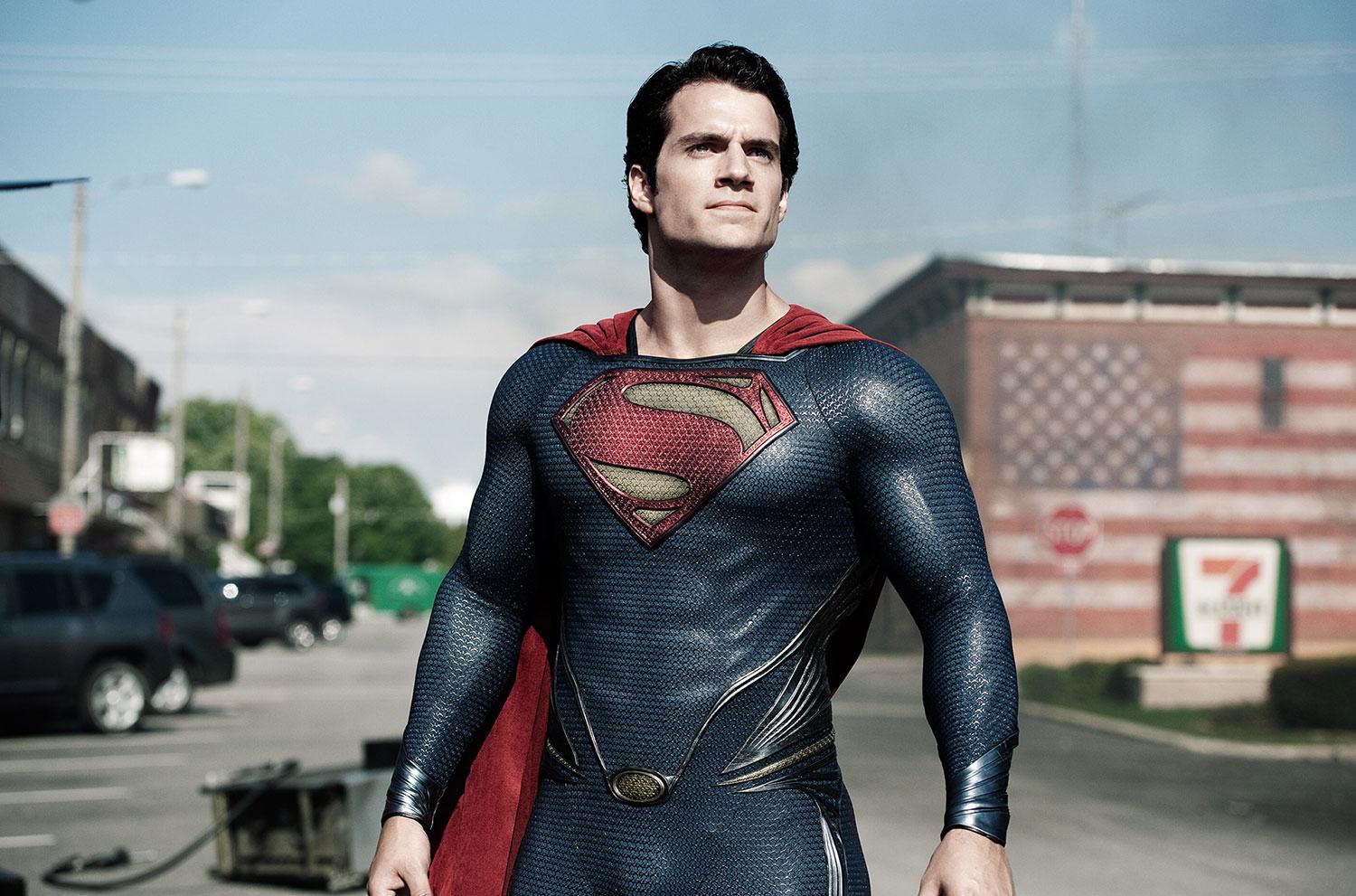
            Two of the biggest movies that came out this year, and two that I liked, were "Man of Steel" the start of a new Superman franchise as a creative collaboration of David S Goyer, Christopher Nolan, and Zack Snyder; and "Star Trek Into Darkness" which is a project by JJ Abrams and Damon Lindelof (I think, I am cutting out several writers, but this script has a Lindelof-ish taste that I can't shake).

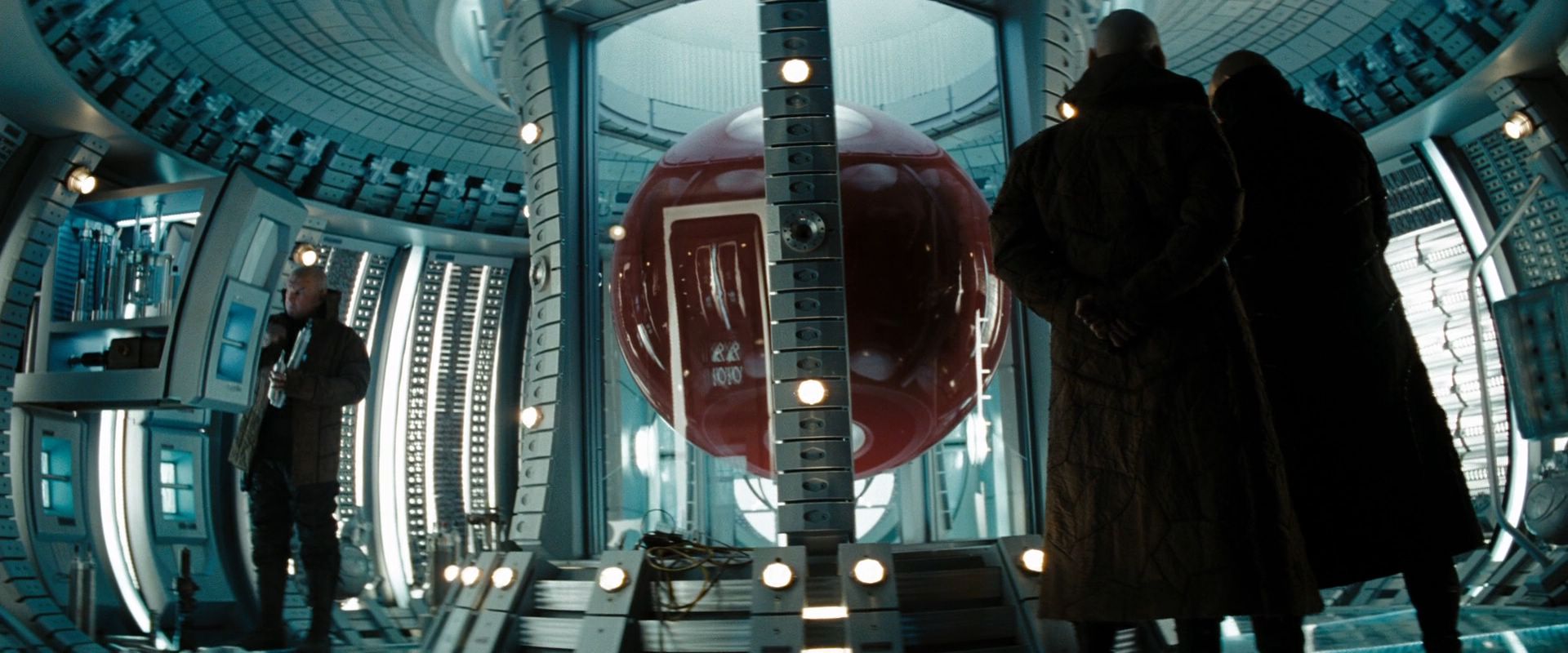
            The movies sort of parallel each other in some ways, a collection of 50+ year old science fiction characters battling against an evil mastermind in a gigantic spaceship, that villain kills a father/father-figure of the protagonist, and ultimately the movie ends with a knock down drag out fight in a major metropolitan area devastated by the conflict.  Both have large ensemble casts and play with big ideas ("Steel" deals with "Eugenics, conspicuous-consumption of natural resources, stagnation of societal evolution, militarized-revolution begetting fascism and abandonment of outward-looking intellectual curiosity" -Moviebob, while "Trek" deals with Eugenics, preemptive war, drone strikes, and the socio-political ramifications of its own interstellar navy: Starfleet).  The point is I think that neither completely realizes the ideas they are shooting for, but for two entirely different reasons.
            "Steel" doesn't fully explore its ideas because it is setting up a franchise that will address them.  Christopher Nolan is big on three act structure, and is very capable of delivering a social essay in the form of a movie.  Since he is producing, and the Warner Bros. studio is pleased with the movie and furthering the franchise in this direction, the ideas that were not fully put to use (because they somehow managed an origin story with a highly complex villain) and did not have time even with the epic length.

            "Trek" fails because it has Lindelof as a creative driver.  Lindelof makes stories that I like to term as "Studded".  Much like a denim jacket with shit tons of glittery bits of metal pressed into it, the ideas and symbols presented in "Trek" are not really a matter of function, but instead of flash.  Things are presented and dropped not because they have value to the story, but because the audience will go "Oh, okay".  That bit of familiarity, that bit of meaning is analogous to seeing the Virgin Mary in a piece of toast, it is meaningful because of what the audience brings to it, not because the toast wanted you to have a religious experience.

Cumberbatch plays a cool character that just keeps getting betrayed, to the point where he is far more sympathetic than he really should be.  Actually, he kinda has a Jesus thing going on because he has blood that can heal you if you get it transmitted to you.
            Now I do not want to blame JJ Abrams for why "Trek" fell short.  He is not a "Trek" fan he is merely a mind-blowing-ly competent director of visuals, pacing, action, and acting.  JJ can't be expected to delve into the mythos and make sure to draw a clear line between well developed story with homage to classic stuff, and functional story studded with references to instill the material with associative weight and strength, that is the writer's job... THEIR ONLY JOB on a "Star Trek" movie, or any movie with an established lore.

            To go back to "Steel" almost all of the ideas hinted at and introduced have appeared in the comics and cartoons.  But at the same time they picked very specific aspects to focus on.  Superman's world is a rich science fiction universe to draw on, with god like aliens, doomed civilizations at their zenith, and the perils of scientific rationality taken to dangerous extremes for any number of reasons that are unethical.  "Steel" is the introductory paragraph to a bigger message using the familiar aspects and iconography of Superman to explain and explore the issues, it is actually only held back by a lot of movie conventions.  You know what character didn't really need to be in the movie?  Lois Lane and the entire Daily Planet crew.  I like them well enough, they are well cast and promise to hold their own in future movies, but pretty much nothing in this has anything to do with them needing to be there, and number of characters could have served Lois' role in the story, and done it better (I am looking at Richard Schiff who played the underused Dr. Hamilton, he could have followed Superman into the ice cave to find the Kryptonian ship, he could have asked to be brought along to Zod's ship when Superman is taken up, he could have talked with Jor-El and worked to modify Clark's Ship into the weapon used against the Kryptonians, Lois did not need to be there.  In fact everything she does would have worked better as the cold opener to a second movie, but movie conventions say that you need Lois, you need the love interest for Superman to save... Whatever.)

Shockingly, this Emmy winning actor was cast to play a character I consider to be rather prominent in the Superman universe and is used far too little in this movie.
            Lastly the big difference is the endings, which I won't spoil really.  "Steel" ends more ambiguously, Superman's relationship with the government is murky, his place in the world is still being felt out, and he is left burdened with how the fallout of the movie's events will play out in the future.  "Trek" just sort of ends.  They tie up the loose ends, no lasting effects are felt, there is no indication for what will happen in the future.  Even events set up in the first half of the movie (an impending war with the Klingon Empire) are not mentioned, even though the movie's epilogue is a flash forward to one year after the events of the film proper.  The bad guy gets an unsatisfactory conclusion (in a way it is quite horrifying) and a lot of bad precedent is set, a get out of jail free card that will end up ignored in the future.  I still liked "Trek", it was fun.  But it has issues, and I don't feel they were intended to be followed up on.

Wednesday, February 22, 2012

Movie Review: Documentaries 2011


            In an effort to keep myself funny I am going to try to write a movie review a day for the next 30 days.  This will be exhausting but I have done it before, so when I fail this time I really won't have the excuse of going beyond my means.  For the sake of simplicity I will just review all of the movies that came out in 2011 that I saw.

            Today I will do two quick reviews of documentaries.  The first one is a sad and confusing movie which deals with a group of actors who have played central roles in something I really like, "The Captains" of Star Trek.  William Shatner talks to Patrick Stewart, Avery Brooks, Kate Mulgrew, Scott Bakula, and Chris Pine (I managed to spell their names right on the first try, that is shocking to me) about portraying someone in command, being science fiction icons, and what they have done since.  I had no idea how balls to the wall crazy some were, and how fun and personable Shatner can be, it is a fun look into the creative process and is a decent way to spend a couple hours if you are a Star Trek fan.

I'm sure you can't.
             The other movie is possibly the most uplifting documentary I have ever seen, and takes a real touching look into the creative process beyond being a performer, into the realms of creator and artist, more specifically the art of puppetry.  "Being Elmo" is such a cute and sweet and legitimate movie.  I think it should be watched to put you in a good mood.  If anything I would have liked it to be more in depth with the technical aspects of the show, it really sparked my curiosity on the topic, but I wanted it how they presented it, I don't have the patience and drive to seek this out on my own.  Really "Being Elmo" left me rather jealous too, I don't have the level of creative fire that Kevin Clash does and I wish I did.  I write this blog and try to be entertaining or thought provoking in my life, but I don't know how far that can go.  One day I will write enough on one thing to have it be a book and that creative energy will be out of me like popping a metaphysical zit, till then I will just look on with green eyes at people like Kevin who have unmitigated success making their dreams real.

Who wouldn't want to be an icon of this Stature.  Shatner wouldn't mind.

Final Scores:
"The Captains": 2.5 out of 5 (3 out of 5 if you are a fan of Star Trek)
"Being Elmo": 3.5 out of 5 (4 out of 5 if you are in need of a mood pick up)